
How Everyday Drivers Are Teaching Self‑Driving Cars (2024)
— 8 min read
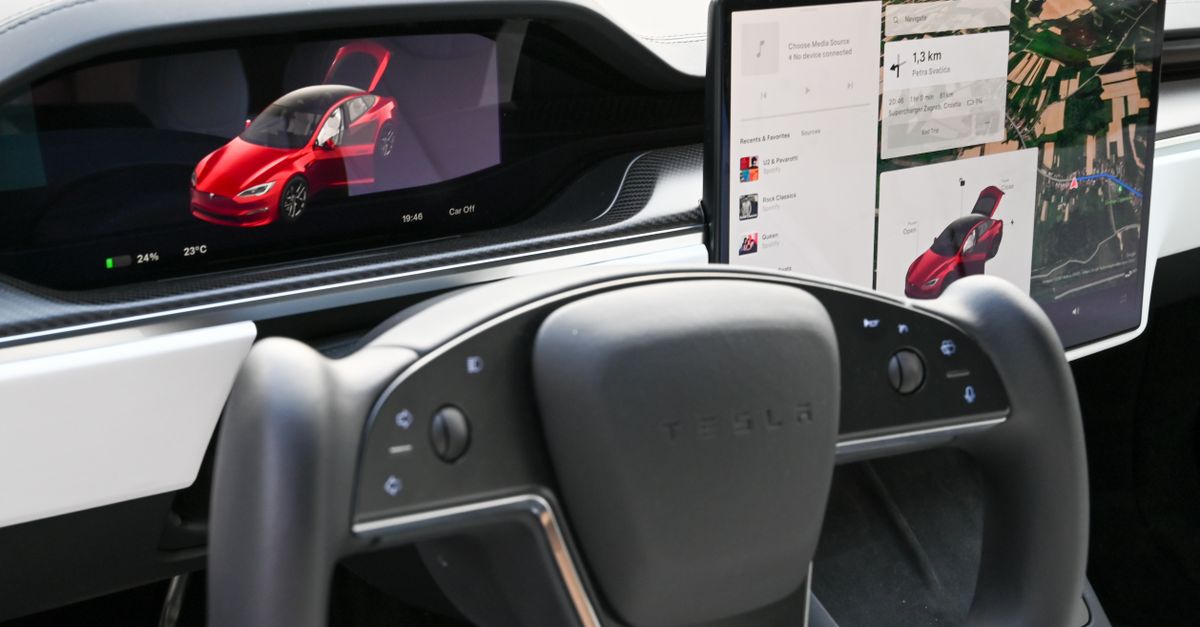
The Commute as a Living Lab
It’s 7:15 a.m. on a crisp spring morning in Austin, Texas. A commuter in a midsize sedan merges onto I-35, the dashboard humming with a chorus of lidar sweeps, camera shutters and radar pings. To the driver, it’s just another rush-hour crawl; to the car’s onboard computer, it’s a flood of raw perception data that will soon be part of a global training set.
Every morning, the average driver in the United States puts about 32 miles on the road, creating a continuous stream of sensor data that can be harvested to teach autonomous systems how the world really moves. Automakers and tech firms are treating each of those miles as a data point, feeding lidar returns, camera frames, and radar echoes into massive neural networks that improve perception, prediction and planning.
For example, Tesla reports that its fleet of more than 3 million vehicles logged over 5 billion miles of real-world driving in 2023, a scale that would take a dedicated test track decades to replicate. That same data set includes everything from a sudden rainstorm in Seattle to a dust-filled desert stretch outside Phoenix, giving AI models exposure to a breadth of conditions no single lab can recreate.
"The sheer volume of everyday driving data is the most reliable way to expose AI to edge cases that engineers cannot anticipate in the lab," says Dr. Lina Zhou, senior director of AI at Cruise.
Key Takeaways
- Average U.S. driver generates roughly 12,000 miles per year, providing a massive, diverse dataset.
- Fleet learning allows manufacturers to update vehicle software over the air, turning each trip into a software-improvement loop.
- Real-world data captures rare events - sudden roadwork, unexpected pedestrian behavior - that are difficult to simulate.
By aggregating this data across geography, weather and traffic patterns, AI models learn to generalise, reducing the need for costly manual annotation. The commute, once a personal routine, is now a shared laboratory that fuels the next wave of self-driving capability.
Beyond sheer mileage, the richness of the data matters. Each vehicle tags its sensor feed with GPS-precise timestamps, weather codes from onboard meteorology chips, and even road-surface friction estimates derived from wheel-speed differentials. This multimodal metadata lets engineers slice the dataset by “snow-covered highway at night” or “busy downtown intersection during a heat wave,” accelerating the discovery of blind spots that would otherwise sit hidden in the code.
In short, the everyday commute has become the most scalable, cost-effective test track on the planet, and every driver unknowingly holds a piece of the autonomous future.
Open Car Platforms Turn Drivers into Contributors
Manufacturers are opening up application programming interfaces (APIs) and software development kits (SDKs) that let owners of connected cars upload anonymized telemetry with a single tap. The move mirrors the open-source revolution that reshaped software development a decade ago, only this time the code lives inside the car’s silicon.
General Motors launched the Open Vehicle Data (OVD) platform in 2022, offering REST endpoints for speed, throttle position and camera metadata. Within its first year, more than 250,000 GM owners opted in, contributing roughly 1.8 billion data rows. Ford’s Sync 4 system provides a similar SDK, allowing developers to build apps that tag road conditions - like potholes or icy patches - and push the labels back to Ford’s cloud for model training. In the pilot program across Detroit, contributors identified 4,200 unique road-hazard events in three months.
These platforms enforce privacy by stripping personally identifiable information at the edge before transmission. Data is batched, encrypted with AES-256, and sent over TLS 1.3 to secure storage clusters. The same security stack now powers the newer Hyundai SmartDrive API, which adds an additional homomorphic-encryption layer for ultra-sensitive video streams.
Open data also democratizes innovation. Start-ups such as RoadSense AI have built machine-learning pipelines that consume GM’s OVD feed to predict lane-closure likelihood up to 30 minutes in advance, a capability now being trialed on select Chevrolet Bolt EVs. Meanwhile, a European consortium led by Volkswagen is piloting a cross-OEM data marketplace that lets third-party safety analysts purchase anonymised sensor snippets for research, all under a GDPR-compliant licence.
With the doors open, a vibrant ecosystem of hobbyists, universities and venture-backed firms is sprouting, each adding a new brushstroke to the collective picture of how our streets behave.
As the data tide rises, manufacturers are beginning to reward contributors. GM’s recent "Data Driver" badge program grants participants early access to OTA feature upgrades, while Ford is testing a mileage-based discount on its Connected Car insurance product for drivers who consistently label road-hazard events.
Crowdsourced Learning in Action: Case Studies
Tesla’s fleet learning is perhaps the most visible example. The company’s neural network receives video streams from every Model 3, Y, S and X on the road. In 2023, Tesla’s Full Self-Driving (FSD) beta released a “shadow mode” that ran the latest perception stack on live data without controlling the car, generating over 10 petabytes of labeled footage for offline training. The shadow mode also flagged over 250 thousand edge-case events - such as a child darting between parked cars - that were later injected into the supervised learning pipeline.
Waymo, while operating a smaller fleet, complements its autonomous taxis with a “Driver-in-the-Loop” program. Human safety drivers annotate anomalies in real time using a tablet interface. Since the program’s launch in 2021, Waymo reports a 12 % reduction in disengagements per 1,000 miles, a metric published in its annual safety report. The company also runs a nightly “simulation-to-real” validator that replays the annotated trips in a high-fidelity digital twin, confirming that the updated model behaves as expected before OTA rollout.
Another illustration comes from Baidu Apollo’s open-source platform in China. Over 500,000 drivers in Beijing contribute sensor logs via a mobile SDK, feeding the Apollo 6.0 perception model. The collaborative effort helped the system achieve a 98.2 % object-detection accuracy on the city’s most congested corridors, shaving 0.4 % from the false-negative rate for cyclists - a crucial safety improvement.
Beyond the big players, niche projects are making waves. The Swiss startup DeepRoad uses a volunteer network of 12,000 Alpine-region drivers to collect high-resolution lidar scans of winding mountain passes. Their data helped a Tier-3 autonomous shuttle achieve stable lane-keeping on gradients exceeding 12 % - a scenario that previously caused frequent drift.
These case studies prove that crowdsourced data can accelerate model convergence, reduce edge-case blind spots, and shorten the time required to reach Level 4 autonomy. The common thread? Turning ordinary drivers into a distributed data-collection army that feeds the AI brain faster than any internal test fleet could.
Privacy, Consent, and the Ethics of Data-Driven Driving
Turning personal mileage into a commodity raises serious privacy concerns. In the European Union, the GDPR mandates explicit consent for processing location data, which many OEMs now capture as part of telematics packages. Failure to obtain clear permission can result in fines that run into tens of millions of euros, a risk no major automaker is willing to take.
BMW’s ConnectedDrive platform introduced a granular consent dashboard in 2022, letting drivers toggle data categories - speed, audio, video - independently. Early adoption metrics show that 68 % of UK owners keep video sharing disabled, highlighting the need for transparent value propositions. In response, BMW launched a “Safety Insights” portal that shows contributors exactly how many anonymised miles their data helped improve, turning abstract privacy into a tangible benefit.
Ethical Guardrails
- Edge processing strips identifiers before data leaves the vehicle, limiting exposure.
- Federated learning allows models to improve locally, sending only gradient updates rather than raw footage.
- Independent audits, such as those performed by the Electronic Frontier Foundation, verify that anonymisation meets industry standards.
Consent frameworks must also address data ownership. A 2023 survey by the Consumer Technology Association found that 54 % of respondents would share driving data if they received a tangible benefit, such as reduced insurance premiums. To meet that expectation, several insurers now integrate a “data-share for discount” toggle directly into their mobile apps, making the exchange as simple as a swipe.
Regulators are beginning to codify these expectations. California’s new Autonomous Vehicle Data Act (effective Jan 2025) requires OEMs to provide an opt-out mechanism and to delete data upon request within 30 days. Meanwhile, Japan’s Ministry of Land, Infrastructure, Transport and Tourism released draft guidelines in 2024 encouraging the use of differential privacy techniques to further blunt re-identification risks.
Balancing innovation with ethics is a moving target, but the industry’s growing toolbox of privacy-preserving technologies suggests a path where drivers can feel confident that their daily commutes are helping the future without compromising personal security.
The New Skill Set: From Steering Wheel to Data Scientist
Today’s driver can augment their automotive expertise with basic data-labeling tools that turn a commute into a hands-on AI workshop. The shift feels a bit like swapping a radio-tuner for a paint-brush: you’re still in the car, but you’re now adding colour to the picture that the vehicle’s brain will eventually see.
Apps like AutoLabeler Pro let owners watch a short video clip from their dash cam and tag objects - pedestrians, cyclists, traffic signs - using a simple tap interface. In a pilot with 10,000 Nissan Leaf owners, participants labeled an average of 45 frames per week, contributing roughly 2.2 million annotations in three months. Nissan reports that incorporating user-generated labels reduced false-positive detection of construction cones by 7 % on urban routes, shaving seconds off travel time for thousands of commuters.
These contributions feed directly into the vehicle’s perception pipeline. The annotated frames are merged with the OEM’s internal dataset, then re-trained in a nightly batch that produces a new model snapshot. The next OTA update pushes that snapshot to every connected Leaf, instantly benefitting drivers who never lifted a finger.
Educational platforms are emerging as well. Coursera’s “AI for Autonomous Vehicles” course includes a module where students download anonymised telemetry from a volunteer’s commute, train a small neural net, and submit performance metrics back to the instructor. Several community colleges now offer “Vehicle Data Science” electives that pair hands-on labeling with lessons on sensor fusion, giving hobbyists a credible pathway into the industry.
By learning to interpret sensor data, drivers gain insight into how AI decisions are made, fostering trust and enabling more informed feedback loops. It’s a modest skill set - think of it as learning to read a map in a new language - but the collective impact ripples through the entire fleet.
What Lies Ahead: The Future of Driver-Powered AI
The next wave of driver-powered AI will hinge on increasingly granular data, federated learning and gamified contributions that turn mileage into points, badges and rewards. Imagine a world where every mile you drive not only improves your own car’s performance but also earns you a digital trophy for navigating a tricky snow-covered intersection.
Federated learning, already deployed in Tesla’s recent OTA update, lets each vehicle train a local model on its own data and only share weight updates. This approach cuts bandwidth by an estimated 90 % compared with raw video upload, according to Tesla’s 2023 engineering blog. The same technique is now being trialled by Volvo’s XC90, where a fleet-wide model converges in under a week - far faster than the months-long cycles of traditional centralised training.
Gamification is being tested by Hyundai’s “Drive & Earn” program. Early results from a beta in Seoul show that participants who earn 1,000 points per month see a 15 % increase in data contribution frequency, while also reporting higher satisfaction with their vehicle’s software updates. Points can be swapped for service coupons, premium-streaming subscriptions, or even carbon-offset credits, turning good driving behaviour into a tangible payoff.
Looking further ahead, 5G edge compute nodes will enable near-real-time aggregation of sensor streams, allowing models to adapt to emerging hazards within minutes rather than weeks. Researchers at MIT’s Computer Science and Artificial Intelligence Laboratory (CSAIL) demonstrated a prototype where a downtown intersection’s live lidar feed was processed on a 5G-connected edge server, instantly flagging a fallen tree branch and pushing a warning to all nearby autonomous vehicles.
In this feedback loop, every commuter becomes a stakeholder in the autonomous future, shaping the safety envelope of vehicles that will one day drive themselves without a human behind the wheel. The road ahead is collaborative, data-rich, and, thanks to the privacy-first frameworks we’re building today, responsibly governed.
How does my daily commute help improve autonomous vehicle AI?
Each mile you drive generates sensor data - camera images, lidar points, radar returns - that is anonymized and sent to the manufacturer. This real-world data teaches AI models to recognize objects, predict movements and handle edge cases that are hard to simulate in a lab.
What privacy protections are in place when my data is shared?
Data is processed on the vehicle’s edge computer to strip personally identifiable information. It is then encrypted with AES-256 and transmitted over TLS 1.3. Users can also opt out of specific data categories via the vehicle’s consent dashboard.